
Health & Home · Special Report
I Have Seen Mold In My Home — But Is It Even Harmful?
Thousands of homeowners spend months cycling through urgent care visits, allergy medications, and unexplained fatigue — never realizing the real problem has been growing inside their walls the entire time.

This article contains health information sourced from the CDC, the National Institute of Environmental Health Sciences, and documented homeowner accounts.
Your Family Keeps Getting Sick — And Nobody Can Tell You Why
You have done everything right. Doctor visits. Antibiotics. Allergy medication. Air purifiers. And yet every few weeks, someone in your house is sick again.
Strep throat. Chest infections. Constant congestion. Kids who seem tired all the time. A cough that never fully goes away.
Most doctors treat the symptoms. Almost none of them ask what is happening inside your home.
You Are Not Imagining It
According to the CDC, indoor mold exposure can cause chronic respiratory infections, persistent coughing, wheezing, fatigue, headaches, and worsening asthma — especially in children and elderly adults.
A peer-reviewed study published in a medical hygiene journal documented a family of five who spent six years dealing with escalating health problems — nocturnal coughing, chronic sinus infections, nosebleeds in the children, and severe fatigue in the mother. After moving out of their mold-contaminated home, the father recovered in two weeks. The children took six months. The mother took eighteen months.
They had no idea the house was the problem until it was years too late.
The Worst Part? Most Mold Is Invisible
The mold you can see — on a bathroom wall, under a sink, in a corner — is almost never the full problem. Mold grows inside walls, under flooring, in HVAC systems, and in crawl spaces. It releases microscopic spores into the air constantly. Those spores travel through your ventilation system into every room of your home.
You cannot see them. You cannot smell them at low levels. But your family breathes them every single day.
You are not alone — and there is a straightforward way to find out if this is what is happening in your home.
Common Mistake
Why Bleach Does Not Actually Kill Mold — And Can Make It Worse
If you are like most homeowners, your first instinct when you spot mold is to grab a bottle of bleach and start scrubbing. It seems logical — bleach kills bacteria, it disinfects, and it is cheap. Unfortunately, when it comes to mold, bleach is one of the least effective things you can use.
The EPA specifically advises against using bleach for routine mold cleanup on porous materials like drywall, wood, and ceiling tiles. Bleach is designed to disinfect non-porous surfaces. On porous surfaces, it cannot penetrate deep enough to reach the mold's roots — and without killing the roots, the mold simply grows back.
Here is what actually happens when you spray bleach on mold inside your walls:
- Bleach evaporates quickly. The chlorine dissipates before it can penetrate drywall, wood framing, or carpet padding — which is exactly where the mold colony's root system lives.
- What you see on the surface is only a fraction of the colony. Beneath that black spot on your wall, mold threads can extend several inches into the material. Bleach bleaches the color out, but it leaves the organism alive and spreading.
- Wet bleach actually feeds mold growth. The water in household bleach soaks into porous surfaces, providing moisture that helps the remaining mold roots expand even faster once the chlorine is gone.
- Scrubbing with bleach releases millions of microscopic spores into the air. You may clean the visible stain, but you are simultaneously aerosolizing spores that travel through your HVAC system and settle in other rooms.
- Bleach fumes are dangerous in enclosed spaces. The EPA notes that mixing bleach with other common cleaners can create toxic gases. In a poorly ventilated bathroom or basement, you are trading one health hazard for another.
The Hard Truth About DIY Mold Removal
If the mold patch is smaller than ten square feet, on a hard, non-porous surface like a tile shower wall, and you know exactly what caused the moisture problem, a proper cleaning solution can work. But that is rarely the real situation homeowners face.
Most mold problems are deeper than the surface. They are in the wall cavity behind the drywall. They are in the HVAC ductwork. They are under flooring that got wet once and never fully dried. In those cases, no amount of bleach, vinegar, or over-the-counter spray will solve the problem — because the mold is not just sitting on top. It is embedded inside the structure of your home.
Professional remediation is not about convenience. It is about removing the colony at its source, containing spores so they do not spread, and fixing the underlying moisture issue so it does not come back.
The Solution
The Answer Is Not Another Doctor Visit. It Is a 30-Minute Inspection.
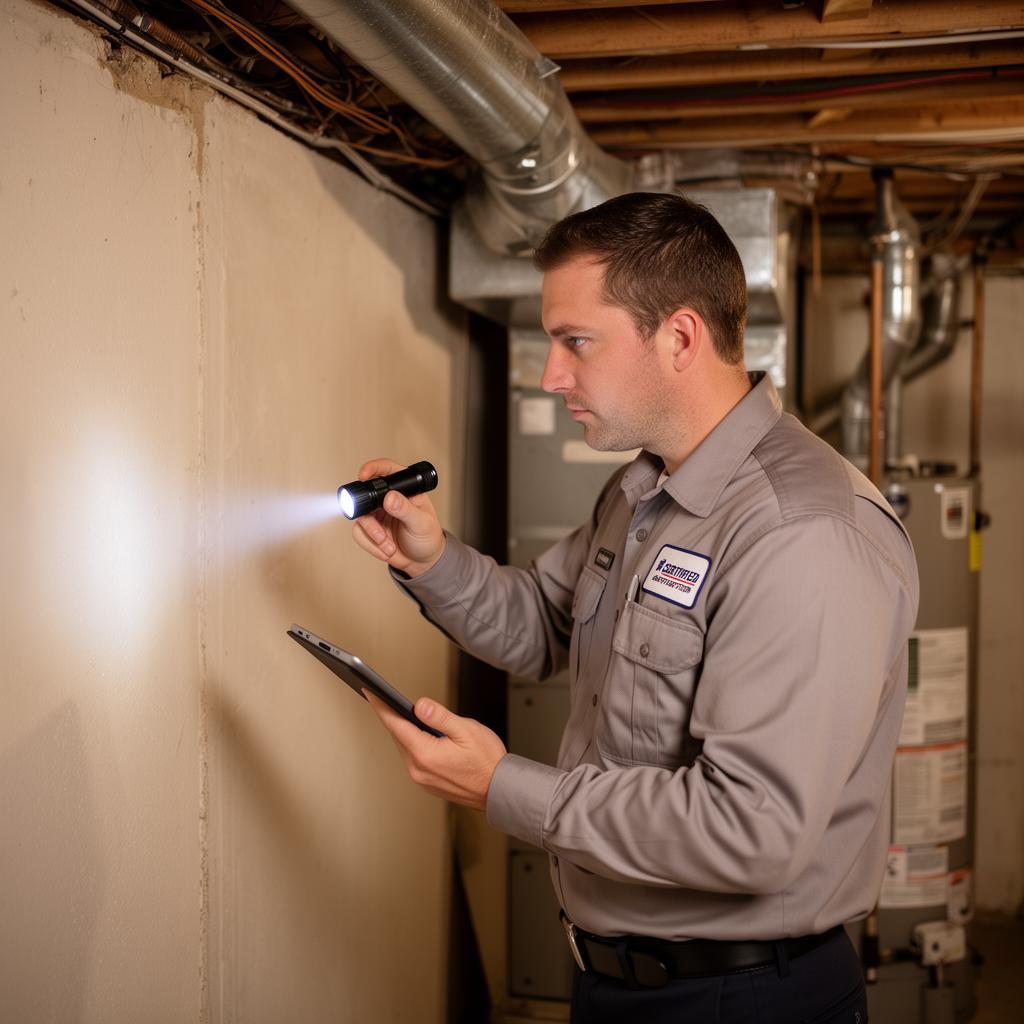
A certified mold inspection does what no allergy test or urgent care visit can — it checks the actual source.
A trained technician comes to your home, examines the areas most likely to harbor hidden mold growth, and gives you a written report on exactly what they find. No guessing. No pressure. No obligation to do anything after the inspection if you choose not to.
What you will know after 30 minutes:
- Whether mold is present anywhere in your home
- How far it has spread and where it is concentrated
- Whether it is the type and level that affects indoor air quality
- Exactly what it would take to remove it and what that costs — in writing, before any work begins
For thousands of families, this single step was the moment everything made sense.
What's Included
Here Is Everything Included In The Free Inspection
Free Certified On-Site Inspection
A trained technician examines your home's highest-risk areas — bathrooms, basements, crawl spaces, HVAC systems, and anywhere with past water exposure. Zero cost. Zero obligation.
Written Findings Report
You receive a clear, plain-language report documenting exactly what was found, where, and how severe. No technical jargon. No inflated language designed to frighten you into a decision.
Honest Scope of Work
If remediation is recommended, you receive a written, itemized quote before any work is scheduled. You know the full cost upfront. There are no surprises.
Post-Job Clearance Certificate
If you move forward, you receive a written air quality clearance certificate confirming your home is mold-free — the document banks, real estate agents, and insurers require.
90-Day Guarantee
If mold returns to any treated area within 90 days, we return at no additional charge.
Why We're Different
What Most Mold Companies Do — And Why It Has Given This Industry a Trust Problem
Real homeowner reviews document a consistent pattern: a company runs a test and presents a quote so large and so alarming that homeowners describe feeling "ambushed." One documented case involved a $45,000 remediation proposal for a detached garage — for one of the most common and manageable mold types found indoors.
The industry has a scare tactics problem. And homeowners know it.
Here is how we operate differently:
- We show you exactly what we found before recommending anything. No inflated findings. No dramatic health claims designed to pressure a decision.
- We give you a written quote before we touch anything. What you are quoted is what you pay.
- We back every job with a 90-day return guarantee — because we are confident the work is done right.
- The inspection is always free. No test fee. No consultation charge. No obligation.
We built our process around one principle: a homeowner who understands exactly what they are dealing with and exactly what it will cost is a homeowner who can make a confident decision. That is all we ask for.
The Process
Four Steps From Uncertainty to Clean, Certified Air
Step 1
Book Your Free Inspection
One call or online request. Tell us your address and what you have noticed — smells, symptoms, visible spots, or past water damage. We schedule your inspection for the earliest available slot, often within the same week.
Step 2
The On-Site Inspection
A certified technician visits your home and examines all high-risk areas. You are present for the entire inspection. We show you what we find as we find it — no closed-door assessments, no surprise reveals.
Step 3
Written Report and Honest Quote
You receive a clear written report of findings and, if remediation is needed, a full itemized quote before we schedule anything. You have complete information and zero pressure.
Step 4
Remediation and Clearance
If you choose to move forward, our crew completes the job, runs a post-clearance air quality test, and hands you a written certification confirming your home is clean. Same-week scheduling available.
Simple, transparent, and built to give you answers — not anxiety.
If Your Family Has Been Sick More Than Usual — This Is Worth 30 Minutes Of Your Time
You may have mold. You may not. Either way, you will know for certain — and that certainty is worth something.
The inspection costs nothing. There is no obligation to move forward. The technician will show you exactly what they find and answer every question you have before leaving.
Thousands of families have made the call and wished they had done it sooner. Not one has regretted knowing.